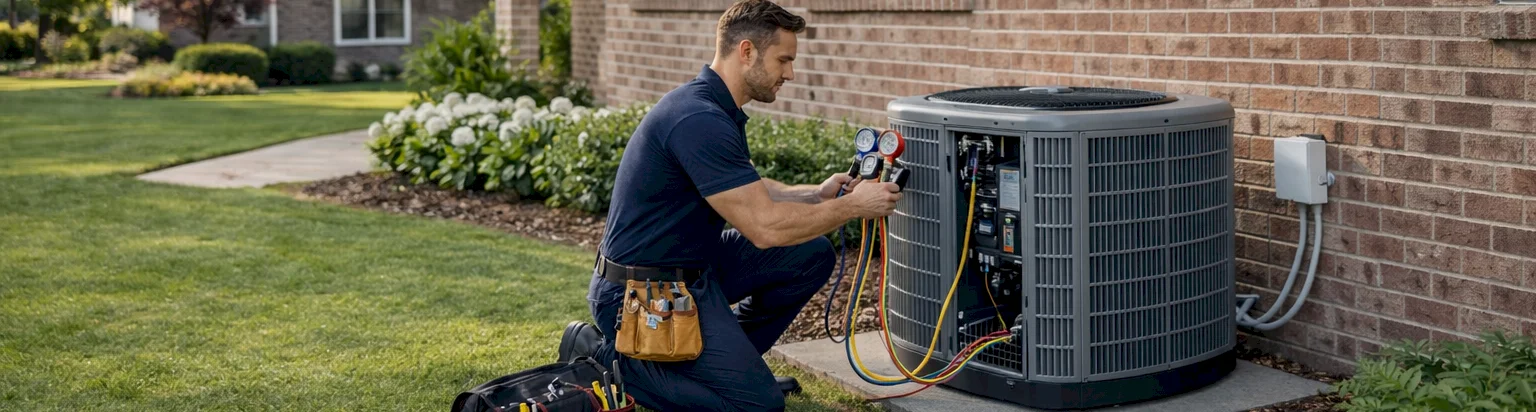
How Long Does an AC Unit Last?
Quick Answer: AC Lifespan at a Glance
- Average lifespan: 15 to 20 years with regular maintenance
- Poorly maintained systems: often fail at 10 to 12 years
- Oversized or undersized systems wear out faster due to short cycling or overwork
- Annual tune-ups are the single biggest factor in reaching the upper end of that range
- R-22 refrigerant systems (pre-2010) are expensive to repair — replacement is usually better
Most central air conditioners last between 15 and 20 years. That range is wide because lifespan depends heavily on how well the system was installed, how consistently it has been maintained, and how hard it has had to work over the years. In Indianapolis, where summers regularly push into the 90s and systems run hard from May through September, a poorly maintained unit can start showing serious wear well before the 15-year mark. Here is what actually determines how long your AC lasts — and how to know when replacement makes more sense than another repair.
The 5,000 Rule: A Simple Repair-vs-Replace Test
Multiply the age of your AC (in years) by the estimated repair cost. If the result exceeds $5,000, replacement is generally the better investment. For example: a 14-year-old system needing a $400 repair scores 5,600 — lean toward replacement. A 5-year-old system needing the same repair scores 2,000 — repair makes sense.
1. Why 15 to 20 Years Is the Honest Answer
Manufacturers design central air conditioners to last roughly 15 to 20 years under normal operating conditions. That assumes the system was properly sized for the home, installed correctly, and serviced at least once a year. In practice, many systems fall short of that range — and some exceed it.
The biggest variable is maintenance. A system that gets an annual tune-up, has its filter changed regularly, and has minor issues caught early will consistently outlast one that runs until something breaks. The compressor — the most expensive component in the system — is particularly sensitive to neglect. Dirty coils, low refrigerant, and restricted airflow all force the compressor to work harder than it was designed to, shortening its life.
2. Factors That Shorten AC Lifespan
Incorrect sizing is one of the most common causes of premature failure. An oversized unit cools the space quickly but shuts off before completing a full cycle — a pattern called short cycling. Each start-up puts stress on the compressor, and a system that short cycles hundreds of times per season wears out much faster than one running normal cycles. An undersized unit has the opposite problem: it runs almost continuously trying to keep up, which also accelerates wear.
Neglected maintenance is the other major factor. Dirty evaporator and condenser coils reduce efficiency and cause the system to run hotter than normal. A clogged air filter restricts airflow and can cause the evaporator coil to freeze. Low refrigerant — almost always caused by a leak — makes the compressor work harder and can cause it to overheat. None of these problems fix themselves, and each one takes time off the system's life if left unaddressed.
Climate also plays a role. In Indianapolis, the cooling season is long enough that systems accumulate significant run hours each year. A system that runs four months a year in a mild climate will age more slowly than one running five or six months in a hot, humid summer.
3. Factors That Extend AC Lifespan
Annual professional maintenance is the most effective thing you can do to extend your AC's life. A tune-up includes cleaning the coils, checking refrigerant levels, testing electrical components, lubricating moving parts, and identifying small problems before they become expensive ones. Systems that receive consistent annual service regularly reach 18 to 20 years.
Replacing your air filter on schedule matters more than most homeowners realize. A clean filter keeps airflow unrestricted, which protects the evaporator coil and reduces strain on the blower motor and compressor. For most homes, a standard 1-inch filter should be replaced every one to three months during the cooling season.
Keeping the outdoor condenser unit clear of debris, overgrown vegetation, and obstructions also helps. The condenser needs adequate airflow around it to reject heat efficiently. A unit buried in shrubs or covered in cottonwood fluff has to work harder to do the same job.
4. Signs Your AC Is Nearing the End of Its Life
Age alone is not always a reason to replace a system, but there are signs that suggest the end is approaching. Frequent repairs — especially when the same component fails more than once — are a strong indicator. If you have spent more than $1,000 on repairs in the past two years on a system that is 15 years or older, replacement is likely the better financial decision.
Rising energy bills without a change in usage patterns can signal that the system is losing efficiency as it ages. Uneven cooling, longer run times to reach the set temperature, and unusual noises like grinding or rattling are also worth paying attention to. A technician can assess the overall condition of the system and give you an honest read on whether it has a few good years left or whether you are throwing money at a system that is on its way out.
5. The R-22 Refrigerant Factor
If your AC system was manufactured before 2010, it almost certainly uses R-22 refrigerant (also called Freon). R-22 was phased out under federal environmental regulations and has not been manufactured in the United States since January 2020. The remaining supply is recycled and reclaimed stock, which has made it extremely expensive — often $100 or more per pound.
A system that develops a refrigerant leak and requires R-22 to recharge can cost several hundred to over a thousand dollars just for the refrigerant, on top of the repair labor. At that point, the math almost always favors replacing the system with a modern unit that uses R-410A or the newer R-454B refrigerant. A technician can tell you exactly what refrigerant your system uses and help you weigh the repair cost against replacement.
Still Have Questions? We Can Help.
If your AC is getting up in years or has needed multiple repairs recently, our technicians in Indianapolis can give you an honest assessment — including whether the system is worth repairing or whether a new installation would serve you better long-term. No pressure, just straight answers.